The Wildroot: Why Handwritten Authenticity Is Reshaping Creative Workflows
In an era defined by algorithmic precision, AI-generated imagery, and hyper-polished digital interfaces, a quiet but powerful counter-trend is gaining momentum: the intentional embrace of human imperfection. At the heart of this shift lies The Wildroot — a cute, simple-lettered handwritten font designed not for uniformity, but for authenticity. More than just a typeface, The Wildroot represents a deliberate return to tactile warmth in digital design — one that resonates deeply with professionals, educators, marketers, and independent creators navigating increasingly saturated and automated creative landscapes.
A Font That Feels Like a Human Hand
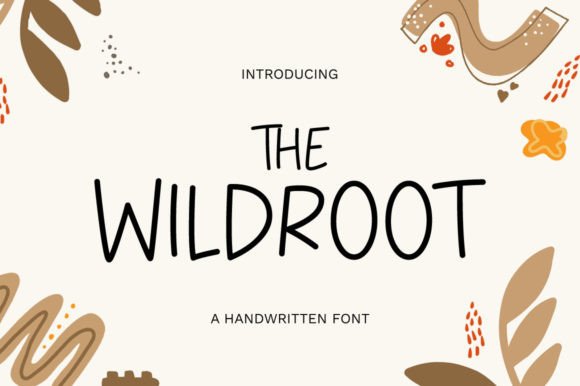
The Wildroot isn’t engineered for neutrality or scalability across every platform. Instead, it’s crafted to evoke the gentle irregularities of chalk on slate — slight variations in stroke weight, subtle baseline wobbles, and soft, rounded terminals that suggest care rather than calculation. Its lowercase letters flow with relaxed confidence; its capitals carry quiet charm. This isn’t “hand-drawn” as a stylistic gimmick — it’s handwritten as a philosophy. When used in teaching materials, classroom posters, or small-business signage, The Wildroot doesn’t just communicate text — it communicates presence.
Unlike many script fonts that rely on excessive flourishes or rigid calligraphic rules, The Wildroot prioritizes legibility without sacrificing personality. That balance makes it uniquely suited for real-world applications: lesson plans shared via Google Slides, printable worksheets for elementary educators, Instagram story overlays for boutique wellness coaches, or hand-lettered product tags in artisanal retail spaces. Its authenticity isn’t performative — it’s functional.
Bridging the Gap Between Digital Tools and Human Connection
Creative professionals today operate at the intersection of speed and sincerity. Clients demand rapid turnaround, platforms reward consistent visual branding, and audiences scroll past content in under two seconds — yet research consistently shows that messages perceived as “human-made” earn higher trust, longer engagement, and stronger emotional recall. A 2023 Adobe Creative Cloud report found that 68% of designers reported increased client requests for “warm,” “approachable,” or “non-corporate” visual language — especially in education, healthcare, and lifestyle sectors.
This isn’t nostalgia — it’s adaptation. As AI tools accelerate production, the value of human signature rises. The Wildroot serves as a subtle but effective differentiator: a visual cue that says, “This was made for you — not optimized for a feed.” Freelance curriculum designers use it to soften the rigidity of standardized learning templates. Small-batch skincare brands apply it to ingredient labels to reinforce craft and transparency. Even corporate L&D teams integrate The Wildroot into internal training decks to reduce cognitive load and increase relatability among remote employees.
Why Educators Are Choosing The Wildroot for Learning Materials
In classrooms — both physical and virtual — clarity and connection are non-negotiable. Teachers no longer treat fonts as neutral vessels; they’re strategic tools for accessibility and affective engagement. The Wildroot supports this shift in three measurable ways:
- Reduced visual fatigue: Its open letterforms and generous spacing improve readability for emerging readers and neurodiverse learners, especially on projected screens or printed handouts.
- Emotional scaffolding: Warm typography lowers perceived difficulty — students encountering a math worksheet set in The Wildroot report feeling “less intimidated” than when the same content uses sterile sans-serifs.
- Consistent brand cohesion: Schools and tutoring studios use The Wildroot across newsletters, slide decks, and bulletin boards to unify their voice — reinforcing identity without relying on logos or color alone.
One Montessori-aligned curriculum developer shared how switching from generic handwriting fonts to The Wildroot reduced parent inquiries about “why this looks so different” — because the difference wasn’t jarring, it was intentional. That intentionality builds credibility.
Aligning With Broader Market Shifts
The rise of The Wildroot mirrors larger economic and cultural movements. Consumers increasingly favor small businesses over conglomerates, local experiences over globalized convenience, and values-aligned purchases over price-driven decisions. According to YPulse’s 2024 Consumer Values Report, 79% of Gen Z and Millennial buyers say “authenticity” influences their purchasing behavior more than five years ago — and they define authenticity not by perfection, but by consistency, vulnerability, and visible human effort.
For entrepreneurs launching e-commerce stores, food trucks, or online courses, The Wildroot becomes part of a holistic authenticity strategy — paired with unfiltered photography, first-person storytelling, and responsive customer service. It signals that the person behind the brand is present, not polished into oblivion. In marketing, where attention is scarce and skepticism is high, that signal carries weight.
Workflow Integration: Simplicity Without Compromise
Practical adoption matters. A font may resonate conceptually, but if it disrupts daily workflows — requiring manual kerning adjustments, limited software compatibility, or inconsistent rendering across devices — it won’t sustain usage. The Wildroot was built with modern creative stacks in mind. It works natively in Canva, Figma, Adobe Creative Cloud, and Google Workspace. Its OpenType features include standard ligatures and contextual alternates — enough variation to avoid repetition, but not so many that it overwhelms users unfamiliar with advanced typography controls.
Freelancers appreciate that The Wildroot requires no steep learning curve. A graphic designer can drop it into a social media carousel in under 30 seconds and immediately elevate tone. A teacher can paste it into a Word document, export as PDF, and print without worrying about missing glyphs or fallback substitutions. That reliability transforms it from a decorative choice into an operational asset.
Looking Ahead: Authenticity as Infrastructure
As generative AI reshapes creative labor, the question isn’t whether machines will replace human designers — it’s how humans will deepen their irreplaceable value. The answer lies not in resisting automation, but in amplifying what machines cannot replicate: context, empathy, judgment, and the quiet resonance of a hand guiding a line.
The Wildroot exemplifies this evolution. It doesn’t compete with AI tools — it complements them. An AI might draft a lesson outline or generate a mood board, but The Wildroot ensures the final output feels grounded, intentional, and unmistakably human. It’s part of a growing toolkit where authenticity isn’t added at the end as a filter — it’s embedded at the start as infrastructure.
This shift extends beyond aesthetics. It reflects a maturing understanding of design’s role in society: not just to inform or persuade, but to connect, reassure, and humanize. Whether you're building a literacy app for early readers, launching a mental health podcast, or designing packaging for organic tea, The Wildroot offers a low-friction way to center humanity in your work — without sacrificing professionalism or polish.
Ultimately, The Wildroot succeeds not because it’s trendy, but because it meets people where they are: seeking clarity in complexity, warmth in efficiency, and meaning in motion. In a world accelerating toward abstraction, sometimes the most forward-looking choice is to write — simply, gently, and by hand.